
Why Most Bonsai Die: 7 Preventable Beginner Mistakes
Most bonsai failures come from predictable care mismatches. Learn 7 beginner mistakes and a diagnose-first checklist to improve plant survival fast.
Bonsai don’t “randomly die”—they decline in slow, readable steps

Most first-time losses aren’t caused by a “black thumb.” They happen because bonsai care is a chain of small decisions—light, watering, soil, and timing—and one weak link compounds the rest. A tree that’s slightly under-lit will dry slower; then common watering myths (like watering on a fixed calendar) lead to soggy roots; then stress makes beginners prune or repot too early. The result looks sudden, but it’s usually predictable.
This is especially true for indoor plants. Homes and apartments create microclimates: north-facing windows, HVAC vents, dry air, and low winter sun. If your bonsai is struggling, don’t guess and don’t “treat” symptoms with random extra watering or fertilizer. Start by diagnosing the environment and root conditions first. That single shift—from reacting to observing—dramatically improves plant survival and turns “beginner mistakes” into quick, correctable course corrections.
The 7 preventable beginner mistakes (and why they’re so common)
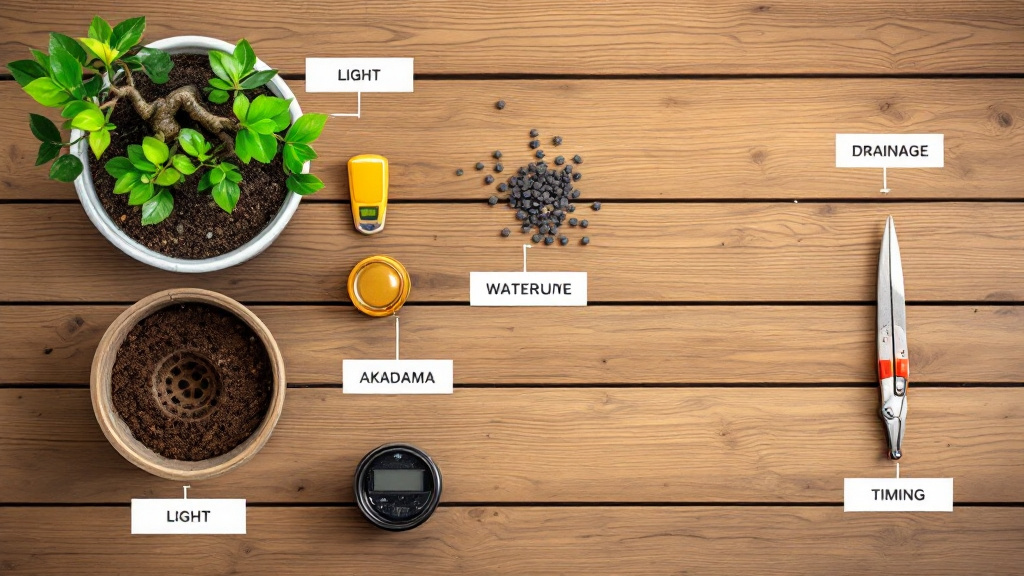
1) Light mismatch: Buying a species that needs bright sun, then keeping it in low light. Leaves thin, growth weak, soil stays wet longer. 2) Watering myths: Watering by schedule instead of checking moisture; overwatering is more common than underwatering in indoor bonsai. 3) Poor drainage/incorrect soil: Decorative pots without proper drainage or dense “houseplant” soil suffocate roots.
4) Bad placement: Next to heat/AC vents, on top of a radiator, or in a drafty window—temperature swings and dry air cause leaf drop. 5) No acclimation: Moving a tree from greenhouse to home, then immediately changing light, location, and watering; stress stacks. 6) Fertilizing too soon/too much: Feeding a stressed tree can burn roots or push weak growth. 7) Rushed pruning/repotting/wiring: Styling feels urgent, but timing is everything; heavy pruning or repotting on a struggling tree can be fatal.
These are classic bonsai care pitfalls because they feel like “doing more,” when the fix is usually better matching, better drainage, and smarter watering.
Diagnose-first checklist: correct course before decline becomes irreversible

Before you change anything, run this quick checklist—then adjust one variable at a time. Diagnose-first prevents the most common beginner mistakes in bonsai care.
Checklist (5 minutes): - Light: How many hours of bright window light (not room light) does it get? Any seasonal change recently? - Soil moisture: Is the top 1–2 cm dry, slightly damp, or wet? Does water drain freely? - Drainage & pot: Is there a real drainage hole and airflow through the soil, or is it compacted? - Placement: Any vents, heaters, drafts, or hot glass? Stable temps? - Recent changes: New location, new pot, new schedule, travel, or missed watering? - Roots & smell: Sour odor or persistent wetness suggests root trouble—pause fertilizer and improve aeration. - Actions to avoid: Don’t repot, hard-prune, or fertilize heavily until vigor returns.
If you’re unsure, choose the low-risk corrections first: improve light, confirm drainage, and refine watering based on moisture—not the calendar. That’s the fastest path to better indoor plant survival.